WELCOME TO SMK BANDAR BARU SALAK TINGGI'S JAPANESE LANGUAGE CLASS AND CLUB BLOG

Ichi

Welcome to this awesome blog.
This blog is created to share with everyone about Japanese language and culture that we learn in our Japanese class and club.We also want to share with you guys about our activities .I hope you guys would appreciate the effort we put into this blog and give positive reviews. If you have nothing nice to say don't say them at all.

One more thing you need to know about us is that we wont post frequently because some of us are either very busy or in my case VERY lazy. So bear with us.
Showing posts with label Home. Show all posts

Tuesday, 13 March 2012

GRANDMASTER OF ORIGAMI

こんにちは! Konnichiwa readers!


Today is also Akira Yoshizawa 101st birthday. Who is Akira Yoshizawa? Huh? You don't know who he is? The origamis' fans must knew who he was. He was an origamist. The father of origami, no the GRANDMASTER OF ORIGAMI. He is the one who raised origami from craft to living art. Awesome! What I knew, he created more than 50, 000 models! A few hundred designs were diagrammed in his 18 books. You know what, he was named Order of the Rising Sun by Japanese emperer Hirohito because the highest honors that can be given to a Japanese citizen. 

origamis of  Akira Yoshizawa

In his childhood, he like to make origami. but, he moved to a factory when he was 13 years old to take a job there. In early 20s, he was promoted from factory worker to technical draftsman. As a part of his new duties, he was responsible for teaching junior employees geometry. Amazingly, the traditional art of origami was used to understand and to communicate geometrical problems.

In 1937, he quit his factory job to continue his flavor, to practice origami full-time. Next two decades, he was lived in poverty and just selling tsudukani (a Japanese preserved condiment, made up from seaweed) door-to-door. 

His origamis then were introduced in many books, the success he achieved for what the hard he faced.
  • ATARASHII ORIGAMI GEIJUTSU, Origami Geijutsu-Sha 1954 
  • Origami Reader I, Ryokuchi-Sha 1957 
  • Dokuhon, Vol.1 (Origami Tokuhon), 1973, ISBN 4-8216-0408-6 
  • SOSAKU ORIGAMI (Creative Origami), Nippon Hoso Kyokai 1984, ISBN 4-14-031028-6 
  • Dokuhon, Vol.2 (Origami Tokuhon), 1986 
  • ORIGAMI DOKUHON II (Origami Reader II), Kamakura Shobo 1986, ISBN 4-308-00400-4    
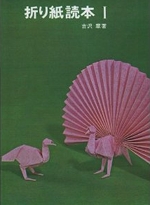
Dokuhon vol 1 (Origami Tokuhon,) 1973

Sosaku Origami (Creative Origami), Nippon Hoso Kyokai 1984

Dokuhon vol 2 (Origami Tokuhon) 1986
Origami Museum I

In March 1998, Yoshizawa was invited to exhibit his origami in the Louvre museum. He did it willingly, and was not opposed to having his photo taken with other competing origami artists, whom he used to detest in his earlier years; many of his patterns were diagrammed by his professional rivals, which angered Yoshizawa when he was younger.[citation needed] He found that he no longer disliked rival origami folders, and that he now enjoyed their company. 


Akira Yoshizawa died on March 14, 2005 in hospital in Itabashi Ward of complications of pneumonia on his 94th birthday. 

In his honor, Akira Yoshizawa was featured on 14 March 2012 as Google's doodle.


TIAH SAN

LESSON 7

あいさつ II/ AISATSU II


  1.  ごめん ください = gomen kudasai = time knock the door, before enter someone's house
  2. おじゃまします = ojamashimasu = when enter someone's house
  3. しつれいします = shitsureishimasu = 'I'm sorry', when you late for something like meeting and class.
  4. がんばって ください = ganbatte kudasai = good luck!
  5. ざんねん でしたね = zannen deshitane = oh, no. what a bad luck!
  6. びっくりしました = bikkurishimashita = oh my God!
  7. き を つけてください = ki wo tsuketekudasai = be careful
  8. いただきます = itadakimasu = 'I eat first', before eat
  9. ごうちそうさま でした = gouchisousama deshita = after done eat
  10. ようこそ = youkoso = welcome
  11. たいへんですね = taihendesune= so tired!
  12. だいじょうぶですか = daijoubudesuka = are you okay?
  13. だいじょうぶです = daijoubudesu = I'm okay

TIAH SAN

ワイト の ひ/ WHITE DAY

" あ! どうですか. あした は ワイト の ひ です"
" Aaa! What should I do? Tommorow is White Day!." 


WHITE DAY? I'm sure this is a question will pop out in your mind when I say White Day. Let me explain. White Day is a continuous day of Valentine's Day. It is also called 'Answer Day' and 'Marshmallow Day'. It was first celebrated in 1978 in Japan. We know that on Valentine's Day, female who gives gift to her crush, however, in White Day, males who received honmei-choco (chocolate of love) or girl-choco (courtesy chocolate) on Valentine's Day have to return the favor by giving gifts that should be DOUBLE or TRIPLE cost of the Valentine's gift. Usually, the returning gifts are cookies, jewellery, white chocolate, white lingerie and marshmallows. Now on, males also give handbags and shoes as gifts.


TIAH SAN

Saturday, 25 February 2012

SWEET BAKERY

メロン パン/Melon Pan


Melon pan is a popular sweet bakery in Japan. Why it's called melon pan even it doesn't taste like melon at all? This is because its shape looks like halves melon after they've been baked. While the word 'pan' is borrowed from the Portuguese for "bread' or "buns" which the japanese use reffering to sweet and savory alike.

They are made from an enriched dough covered in a thin layer of crisp cookie dough. They are not traditionally melon flavored, but in recent times it has become popular for manufactures to add melon to melon pan. There are also others flavored with caramel, maple syrup and chocolate. Sometimes with syrup, whipped or flavored cream or custard as a filling. 


Don't be surprise if I said there is also MEGA MELON PAN. (aaaa.... oishii~)

Melon pan is soft, dough and kinda chewy. Well, I never eat, but I know it from people and few webs I read. But, it really looks oishii, I wish I can get one too. never mind, we can bake melon pan ourselves. How? Okay, here is the recipe. 


Ingredients


Bread dough


  • hard flour 200


  • dry yeast 2 teaspoon


  • butter 20g

  • sugar 2 tablespoon


  • salt 1/2 teaspoon


  • lukewarm water 1/2 cup


  • egg 1/2 piece


  • Topping cookie dough
    • soft flour 120g

  • baking powder 1/2 teaspoon


  • butter 40g


  • sugar 50g


  • egg 1/2 piece


  • table sugar 1 tablespoon

    How to make

    1. Kneading: 15 minutes with bread kneader
    2. Primary fermentation: 40 minutes at 30 degrees centigrade
    3. Preparation of Topping: Cream butter and sugar in a bowl. Beat in egg. Combine the flour and baking powder. Roll dough into 9 balls. Put them in refrigerator for 30 minutes.
    4. Shaping: Punch the dough down and divide it into 9 pieces. Round each dough into a ball and let dough rest for 15 minutes.
    Put the topping cookie dough out of refrigerator and roll out each of them into 3 inches in diameter. Cover the bread dough with this cookie dough. Put the table sugar on the top of dough, and make a lattice pattern with the back of knife.
    5. Secondary fermentation: 30 minutes at 35 degree centigrade
    6. Baking: 15 minutes at 180 degree centigrade  


    *Here is a video how to make a mero pan. You can also use the recipe from this video.


    Ganbattene! Good luck!


    TIAH SAN


  • Sunday, 19 February 2012

    JAPANESE GIFT WRAPPING

    On the last Wednesday, Japanese Language Club did a 'Japanese Gift Wrapping' for us.The japanese gift wrapping only uses 1 cellophane tape.It was complicated but fun actually.  Here are some pictures :


    Time to measure the wrapping paper! Hihihi


    Tiah san is so happy when Nadia san is helping her 


    Everybody is busy helping out the others.


    Here are some who have finished!


    Me with the 'teachers', Farah san and Tiru san.

    If you want to learn on how to do it :


    Photo credits : Firdaus san 


    ALIA SAN 


    Saturday, 18 February 2012

    LESSON 6

    あいさつ/ Aisatsu

    Simple phrase for beginners. These are the basics on how to talk in Japanese.

    1. おはよう ございます = ohayou gozaimsau = good morning
    2. こんにちは = konnichiwa = good afternoon
    3. こんばんは = konbanwa = good evening
    4. おやすみ なさい = oyasumi nasai = good night
    5. さようなら = sayounara = goodbye
    6. じゃ また = ja mata = see ya
    7. いって らしゃい = itte rashai = have a good trip
    8. いって まいります = itte mairimasu = okay, see ya
    9. ただいま = tadaima = i'm home
    10. おかえりなさい = okaerinasai = welcome home 
    11. おげんき ですか = ogenki desuka? = how are you?
    12. げんき です = genki desu = i'm fine
    13. おひさひ ぶりですね = ohisashi buridesune = long time no see
    14. そうですね = soudesune = yeah, long time.
    15. おめでとう ございます = omedetou gozaimasu = congratulation
    16. おだいじに = odaijini = take care
    17. ありがとう ございます = arigatou gozaimasu = thank you
    18. どう いたしまして = dou itashimashite = your welcome
    19. すみません = sumimasen = excuse me/ i'm sorry/ thanks
    20. ちょっと まって ください = chotto matte kudasai = wait a minute   


    TIAH SAN

    LESSON 5

    じこしょかい/ JIKOSHOKAI

    じこしょかい is a way how to introduce ourself in Nihongo. Don't worry because it's not as hard as you think if you know how to present. Let me tell you how.


    はじめまして.
    わたし は ________ です.
    どうぞう よろしく おねがい します.

    Hajimemashite.
    Watashi wa _______ desu.
    Douzou yoroshiku onegai shimasu.

    Hi.
    My name is _______.
    Nice to meet you.

    # the space provided is to fill in the name.

    'Hajimemashite' is a phrase for first time meet. 'Douzou yoroshiku onegai shimasu' is 'nice to meet you' after say your name also for the first time in polite form. If you want to say it just to friends just say 'douzou yoroshiku'.

    Get it? Practice more as practice make perfect! ;)

    TIAH SAN

    LESSON 4


    KANJI are the adopted logographic Chinese characters hanzi that are used in the modern Japanese writing system along with hiragana (ひらがな, 平仮名), katakana (カタカナ, 片仮名), Indo Arabic numerals, and the occasional use of the Latin alphabet (known as "rōmaji"). The Japanese term kanji (漢字) for the Chinese characters literally means "Han characters" and is the same written term in the Chinese language to refer to the character writing system hanzi (汉文/漢字).


    Source:Wikipedia


    THEAWESOMEFARAH

    SHINKANSEN

    The Shinkansen (新幹線, new trunk line), also known as the "Bullet Train", is a network of high-speed railway lines in Japan operated by four Japan Railways Group companies. Starting with the Tōkaidō Shinkansen in 1964,the network has expanded to currently consist of 2,387.7 km (1,483.6 mi) of lines with maximum speeds of 240–300 km/h (149–186 mph), 283.5 km (176.2 mi) of Mini-shinkansen lines with a maximum speed of 130 km/h (81 mph), and 10.3 km (6.4 mi) of spur lines with Shinkansen services.The network presently links most major cities on the islands of Honshu and Kyushu, with construction of a link to the northern island of Hokkaido underway and plans to increase speeds on the Tōhoku Shinkansen up to 320 km/h (199 mph).Test runs have reached 443 km/h (275 mph) for conventional rail in 1996, and up to a world record 581 km/h (361 mph) for maglev trainsets in 2003. It is also the third fastest train in the whole world. 


    ALIA SAN

    LESSON 3

    ごい - Vocabulary


    1.にがい = nigai = bitter
    2.すつぱい = suppai = sour
    3.かわいい = kawaii = cute
    4.おもしろい = omoshiroi = funny
    5.げんき = genki = well / healthy
    6.ハンサム = hansamu = handsome
    7. きびしい = kibishi = strict
    8. やさしい = yasashi = kind
    9.しんせつ = shinsetsu = kind-hearted
    10. まじめ = majime = hardworking
    11. べんり = benri = convinient / comfortable
    12. たのしい = tanoshi = enjoy
    13. はな = hana = flower
    14.きれい = kirei = beautiful
    15. リンゴ = ringgo = apple
    16. めがね = megane = spectacles
    17. パン  = pon = bread 
    18. ぢてんしゃ = jitensya = bicycle
    19.くるま= kuruma = car
    20. かわ = kawa = river 


    ALIA SAN

    LESSON 2

    ごい - Vocabulary


    1.すごい = sugoi = great
    2.あつい = atsu i = hot (weather )
    3.あつい = atsu i = thick 
    4.さむい = samu i = cold (weather )
    5.ちかい = chikai = near
    6.とおり = toori (pronounce as tori) = far
    7.あたらし = atarashi = new
    8.ふるい = furui  = old 
    9.むずかし = muzukashi = hard
    10. かんたん = kantan = easy 
    11. たかい = takai = expensive / tall
    12. やすい = yasui = cheap / short
    13. いそがしい = isogashi = busy 
    14. うすい = usui = thin (object)
    15. おそ い  = osoi = late 
    16. はやい = hayai = quick
    17. いい ( よい) = ii / yoi = good 
    18. わるい = warui = not good / bad 
    19. あまい = amai = sweet 
    20. からい = karai = spicy 


    ALIA SAN

    Friday, 17 February 2012

    PICTURES

    Yay! At last, this is the first post from me, Alia san, well I'm just going to post some pictures when we were at the JL Fest.


    When we arrived at the JL Fest 


    This dress is called Yukata/Kimono,so pretty :D


    There were many Japanese foods too like this picture above is
    called 'Udon' and the below pictures are called 'Takoyaki' my favourite :D


    And then , we were forced by Sensei to dance 'Yosokai' (our school was the first one), 
    but it was quite fun though , many of us has lost weight :P


    We also met many cosplays like :


    Tiah san with cosplay Haruhi Suzumiya


    and this, I forgot the name.

    and  as for the second day, 


    We get free tshirts!! :D


    Tiru san at her Ikebana workshop


    Me at the calligraphy workshop


    The left one is Farah's and the right one is mine :D
    This is at the Flower & Design workshop


    Farah san with the JL Fest sign 


    And we went back to the school .
    That's all.

    Thank you for filling your time at our blog

    ALIA SAN